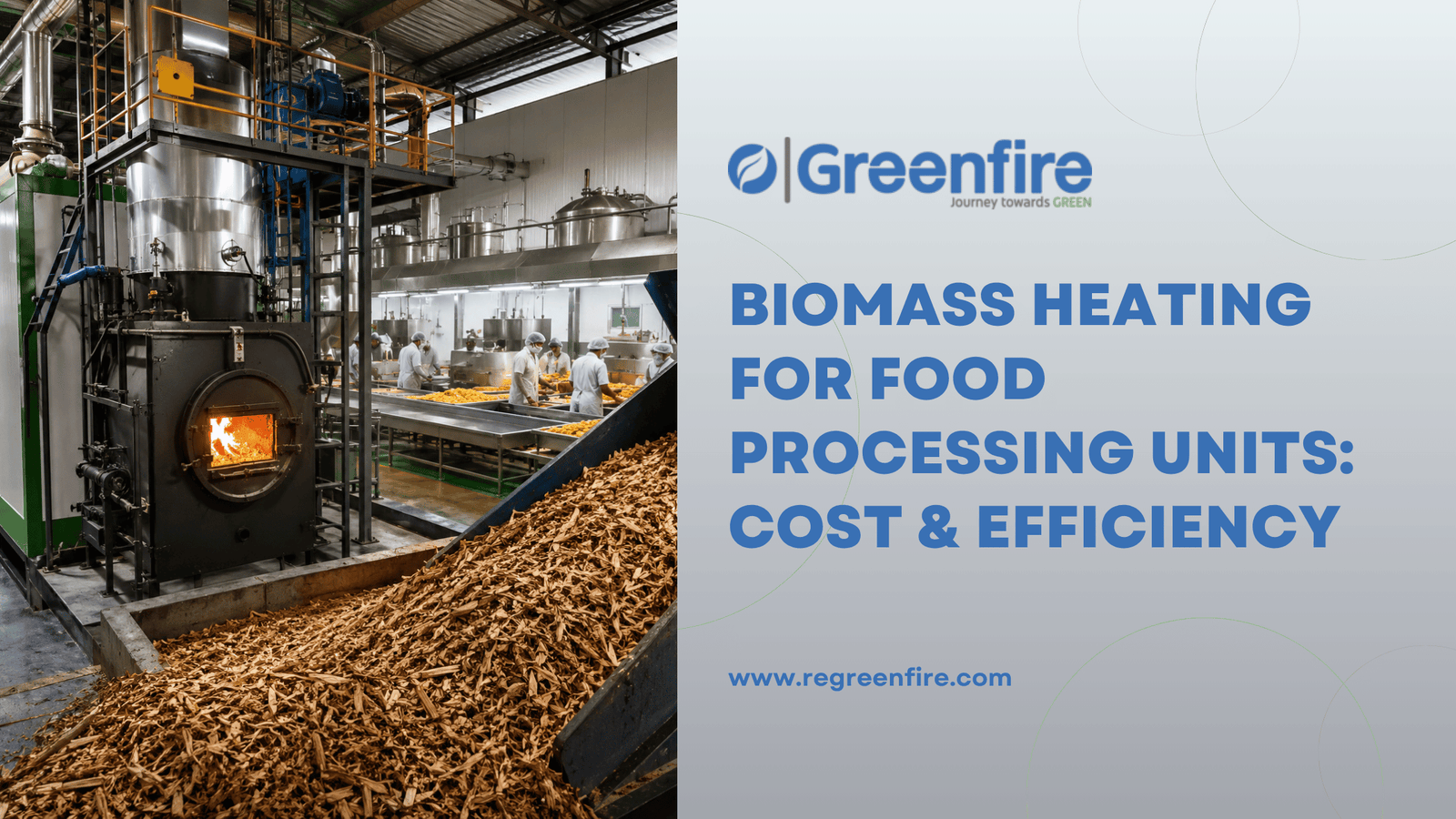
Indian food manufacturing companies are looking for ways to reduce fuel costs and make their production process efficient. The growing cost of fossil fuels and stringent environmental requirements have motivated many companies to look for alternatives that would help them make use of renewable energy sources.
For example, many food companies are now turning to renewable boiler heating systems such as industrial wood pellet burners. They provide reliable heating through renewable fuel sources such as biomass pellets. Whether it's a dairy plant in Gujarat or a rice mill in Punjab or a spice manufacturing unit in Kerala, heating systems are providing relief to many companies.
This guide explains how biomass heating works, its costs, efficiency and benefits, and helps food processing businesses understand whether it is worth the investment for their heating requirements.
Why Food Processing Units Need Efficient Heating
Almost every food processing operation depends on heat. Boilers are working behind the scenes for:
- Steam generation
- Cooking and blanching
- Drying
- Sterilisation
- Cleaning equipment
- Pasteurisation
Since these boilers often run for 10-15 hours a day, fuel becomes one of the biggest recurring costs in the business.
This is exactly where a biomass pellet burner for Thermal heaters, boiler, furnaces makes sense. It delivers steady heat while cutting your reliance on diesel, furnace oil, or coal.
What is an Industrial Pellet Burner for Boilers?
In other words, it is a burner that uses compressed pellets rather than liquids or fossil fuel. Pellets can be typically produced from:
- Agricultural wastes
- Sawdust
- Wood waste
- Crop wastes
The burner uses the pellets to produce heat and transfers this heat into your boiler. The boiler performs its routine work of generating steam or hot water. Most modern units also come with automatic feeding and temperature controls, so you're not manually shovelling fuel in every hour.
Common Biomass Fuels Used in India
- Wood pellets
- Rice husk pellets
- Groundnut shell pellets
- Mustard stalk pellets
- Sugarcane bagasse pellets
Since India generates massive amounts of crop residue every year, these fuels are fairly easy to source in most regions.
Why Biomass Heating Is Catching On in India
A lot of this waste used to get burned in open fields, which caused pollution and wasted a resource that could actually be used. Turning it into pellets solves both problems at once.
Add to that the government's continued push for cleaner industrial fuel, and biomass heating starts looking less like an experiment and more like the obvious next step.
Industries already making the switch include:
- Dairy processing
- Tea and spice manufacturing
- Bakery production
- Edible oil mills
- Rice mills
- Fruit and vegetable processing
Cost of Installing a Biomass Heating System
Costs vary depending on your boiler size, automation level, and how much fuel storage you need. But here's a rough idea for Indian buyers.
Setup Costs
- Small burner: ₹3-6 lakh
- Medium burner: ₹6-12 lakh
- Large industrial burner: ₹12 lakh+
Running Costs
Biomass pellets typically cost ₹7-12 per kg in India, which usually works out to a fraction of what diesel costs for the same heat output.
Most food units switching from diesel or furnace oil see fuel savings of 40-60% annually, and many recover their investment within 12-24 months of continuous operation.
How Efficient Are Biomass Pellet Burners?
Efficiency isn't automatic; it depends on a few things working together.
Pellet Quality
Dry, uniform pellets burn cleanly. Wet or poor-quality ones create more ash and waste fuel.
Burner Settings
Getting the air-to-fuel ratio right makes a noticeable difference to combustion.
Regular Maintenance
Skipping ash cleaning or component checks slowly drags efficiency down.
Boiler Condition
Even the best burner underperforms if the boiler itself isn't well maintained.
When everything's dialled in properly, most modern biomass wood pellet burner systems hit a combustion efficiency of 85-92%, which stacks up well against traditional oil-fired setups.
Benefits of Using Biomass Heating in Food Processing
- Lower fuel costs
- Stable heat supply
- Reduced carbon emissions
- Better use of agricultural waste
- Less manual fuel handling
- Cleaner workspace with less smoke
Biomass Heating for Food Processing: Is It Worth the Investment?
For food processing units with regular and high heating requirements, biomass heating can be worth the investment, particularly when replacing costlier fossil fuels such as diesel or furnace oil.
Whether it is worth the investment for a particular facility depends on factors such as daily boiler operating hours, current fuel costs, biomass pellet availability, system efficiency, maintenance requirements and the initial installation cost.
Businesses should compare their existing annual fuel expenses with the expected biomass fuel and operating costs before investing. Units with consistent steam or process-heating requirements generally have greater potential to recover the initial investment through long-term fuel savings.
A Real-World Example
Picture a mid-sized dairy plant in Ahmedabad running its boiler nearly 14 hours a day. For years, it depended on furnace oil, and costs kept swinging with the market.
After switching to a biomass pellet burner, the plant saw:
- Lower monthly fuel spend
- More consistent steam output
- Less smoke around the facility
- Easier fuel handling overall
Every business is different, but stories like this are becoming common across India's food processing sector.
Choosing the Right Biomass Burner
Not every burner fits every setup. Before buying, think through:
Heating Capacity — match it to your actual steam requirement, not a rough guess.
Fuel availability – see that the pellets can be easily obtained close to your facility.
Automation Features — automatic ignition and feeding save labour long-term.
Safety Systems — temperature monitoring and emergency shutdown are non-negotiable.
After-sales support – proper after-sales services prevent you from having costly downtime.
Practical Tips to Improve Boiler Efficiency
- Only use certified pellets
- Store pellets in dry places
- Ensure that you maintain the system
- Fuel consumption should be monitored weekly
- Train operators on burner settings
- Check the combustion chamber frequently
- Replace worn parts immediately
Common Mistakes to Avoid
Buying through price comparison alone. Burners that are of poor quality tend to be expensive because of inefficiencies and breakdowns.
Poor quality of fuel. Dampness or poor quality of the pellets reduces the efficiency of combustion.
Lack of maintenance. Neglect is like wasting a little fuel every day.
Wrong boiler sizing. Oversized or undersized systems both waste energy in different ways.
Poor installation. Even a good burner underperforms if it's not installed correctly.
Is Biomass Heating Suitable for Small Food Businesses?
Yes, and this is often overlooked. Small and mid-sized units producing snacks, dairy, bakery items, or packaged foods can benefit just as much as larger factories, especially if their boiler runs daily.
Before making any investments, an energy assessment is a good idea to know how much fuel you need.
Conclusion
In India, food processing companies are no longer focusing on the cost-saving aspect of energy efficiency; rather, they need to look at this practice as being part of a sustainable business practice. Setting up the right biomass pellet burner for boiler installation can assure you of consistent heat, significant savings in fuel, and cleaner manufacturing processes without compromising on your product quality.
If you own a dairy processing company, a rice milling unit, or a spice processing unit, you might want to consider getting in touch with us at Regreenfire to see what we have in store for your company.
FAQs
1. What is a biomass pellet burner for boilers?
A burner is used to burn biomass pellets to generate heat that will drive the boiler to generate steam or hot water.
2. Is biomass heating cheaper than diesel?
Yes, in most of the cases biomass heating is cheaper compared to diesel fuel.
3. In which industries are biomass boilers used in India?
Among them are food processing industries, dairy industries, textile industries, pharmaceutical industries, rice mills, tea mills, and paper mills.
4. How often should a biomass boiler need maintenance?
The cleaning of ashes and servicing depends on the number of hours that the boiler is operated per day.
5. Are biomass pellet burners eco-friendly?
Yes, because pellets being made from natural waste materials reduce the reliance on fossil fuels and help reduce emissions.
6. Is biomass heating worth the investment for food processing units?
Biomass heating can be worth the investment for food processing units that have regular steam or process-heating requirements and currently depend on relatively expensive fossil fuels. The actual return depends on fuel consumption, operating hours, biomass pellet prices, installation cost and system efficiency. A fuel-cost comparison and energy assessment should be completed before making the investment.