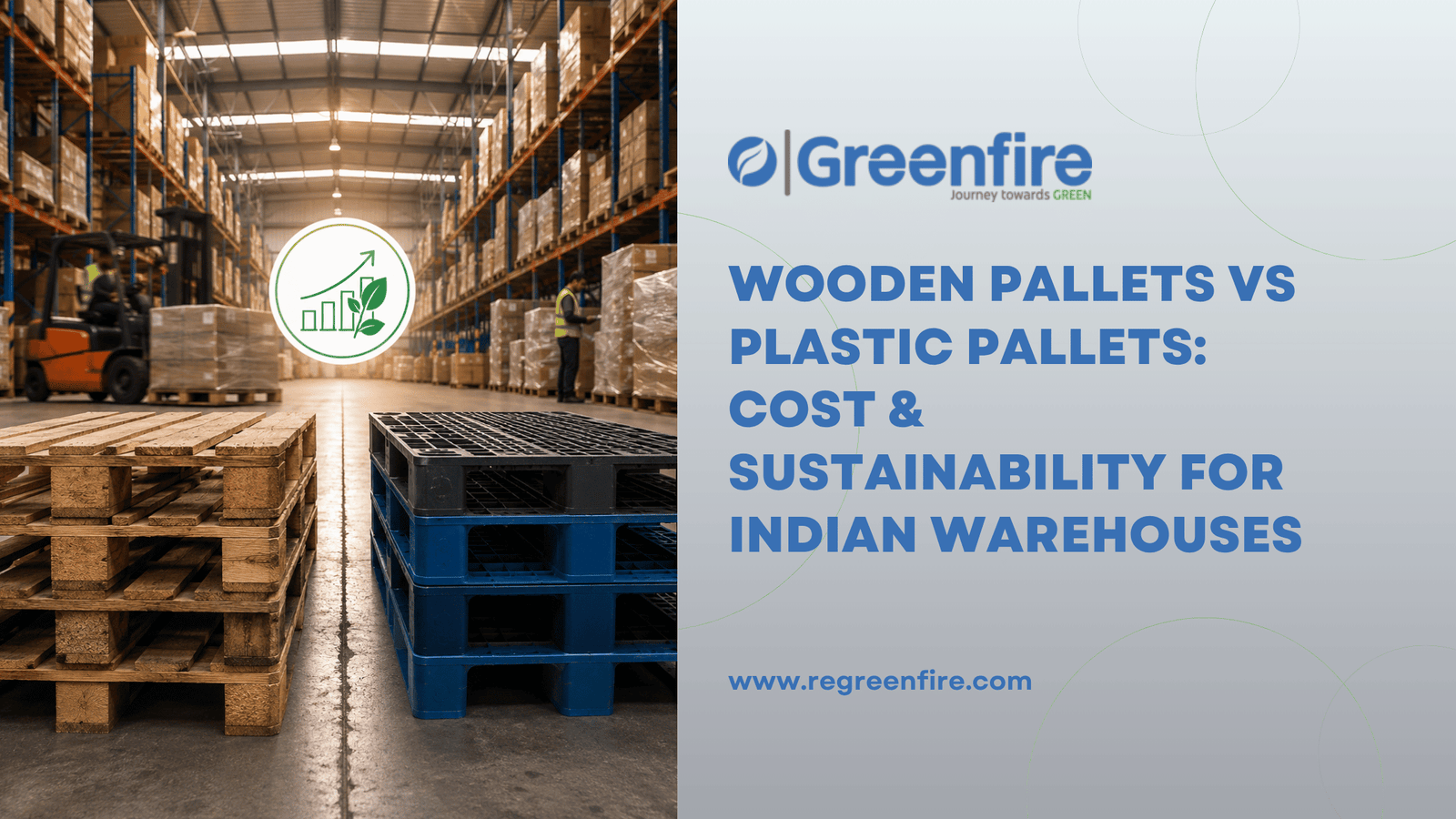
The choice of the proper pallet is not just about efficient transportation in Indian warehouses but also has a lot to do with such factors as expenses, handling, security of products, maintenance needs, and even the ecological aspect of a company’s activities.
For companies comparing the cost-effectiveness of warehouse equipment and their greenness, the comparison of wooden and plastic pallets requires special consideration. In addition, this comparison can be related to such a current issue as pellet burner central heating, when biomass pellets become renewable heat sources.
Then, what pallet is better to use in Indian warehouses? The answer to this question depends on the budget, working conditions, kind of product and other factors.
Wooden vs Plastic Pallets: Quick Comparison
| Factor | Wooden Pallets | Plastic Pallets |
| Initial cost | Lower | Higher |
| Weight | Light | Varies |
| Durability | Moisture-sensitive | Moisture-resistant |
| Repairs | Easy | Difficult |
| Hygiene | Absorbs contaminants | Easy to clean |
| Recyclability | Reused, repaired, recycled | Recycled |
| Best for | One-way transport | Repeated, hygienic use |
Wooden Pallets: The Traditional Choice
Wood is still the go-to pallet material for most Indian warehouses. It's affordable, it's everywhere, and any local carpenter can patch one up.
If you're running operations out of Ahmedabad, Vadodara, Pune, or Chennai, wood is often the practical starting point for everyday goods movement.
Why businesses like it:
- Low upfront price
- Locally sourced
- Simple repairs
- Good for one-way shipping
Where it struggles:
- Absorbs moisture
- Prone to pests
- Shorter lifespan outdoors
- Needs ISPM-15 for exports
Plastic Pallets: The Modern Alternative
Plastic pallets cost more the day you buy them, but that price tag isn't the full story.
They shrug off water, clean up fast, and hold their shape far longer than wood. That's exactly why food processing, pharma, and chemical-handling warehouses lean toward plastic.
Why businesses like it:
- Long service life
- Water-resistant
- Easy to sanitise
- Consistent dimensions
Where it struggles:
- High initial cost
- Hard to repair
- Not always exportable
- Petroleum-based material
Cost Comparison: Don't Stop at the Price Tag
A one-time purchase price doesn't tell the whole story. Here's how the numbers actually play out over a typical 5-year warehouse cycle.
WOODEN PALLETS (5-Year Outlook):
- Cost-effective purchase, but costs accrue in recurring repairs and replacements.
- For a 1,000-pallet warehouse, the annual expenditure on replacements and repairs alone could be Rs 3-4 lakh.
Plastic Pallets (5-Year Outlook)
- More expensive at the time of purchase, but virtually no maintenance expense for years to come.
- That same warehouse with 1,000 pallets could end up spending less than Rs 1 lakh a year after the initial investment is made.
With high-turnover warehouses operating multiple shifts, plastic often becomes cheaper within a 3-4-year period despite the higher initial cost.
What to actually track:
- Purchase price
- Expected uses
- Repair costs
- Cleaning needs
- Replacement rate
- Handling losses
- Disposal costs
- Transport weight
For high-volume warehouses, cost per use tells you far more than the price on day one.
Sustainability: Which Pallet Is Actually Greener?
There's no clean winner here either.
Wood is renewable when sourced responsibly. Broken wooden pallets can be repaired, reused, turned into other wood products, or recovered for energy, including as biomass feedstock for systems like pellet burner central heating.
Plastic pallets take a different route to sustainability. They last a long time, so you replace fewer over time, and most can be recycled when they finally retire.
It’s not a question of wood versus plastic, but what happens throughout the entire lifecycle of the pallet, from sourcing to disposal.
What Should Indian Warehouses Actually Choose?
Go with wood when:
- Budget is tight
- Cycles are limited
- Repairs matter
- Conditions are dry
Go with plastic when:
- Reuse is frequent
- Hygiene is critical
- Moisture is a concern
- Dimensions must stay consistent
Common Mistakes to Avoid
Buying on price alone
Cheap pallets that need constant replacement aren't actually cheap.
Ignoring warehouse conditions
Humidity, temperature, and stacking habits all affect pallet lifespan.
Skipping load checks
Always match static, dynamic, and racking loads to your real use case.
Treating sustainability as one-dimensional
A pallet reused hundreds of times isn't the same, environmentally, as one thrown away after one trip.
Practical Tips for Making the Right Choice
- If your goods move domestically and you replace pallets often anyway, wood is usually the more budget-friendly choice
- If you export regularly, plastic saves you the hassle and cost of fumigation certification
- For pharma, food, or hygiene-sensitive goods, plastic is almost always the safer bet
- If sustainability reporting matters to your business, ask your wood supplier whether broken pallets are sent for biomass or pellet processing rather than landfill
- Consider a hybrid approach: plastic for high-frequency internal movement, wood for one-way outbound shipments
FAQs
1. Are wooden pallets less expensive than plastic pallets in India?
Yes, initially. But the overall costs depend upon their maintenance, recycling, and replacement frequency.
2. Which pallet is more suitable in humid conditions of India?
Plastic. It is much less affected by humidity than raw wooden pallets.
3. Can wooden pallets be recycled?
Yes – they can be repaired, reused or recovered for some other purpose, even energy recovery when they become unusable.
4. Is there anything automatically sustainable about plastic pallets?
Not automatically, their sustainability lies in their longevity and recyclability.
5. What is the connection between pallets and the pellet burner central heating system?
Both systems utilise the same industrial trend which involves using resources effectively. Pellet burner central heating uses biomass pellets as fuel, much like retired wooden pallets can be recovered as biomass material instead of landfill waste.
Conclusion
Wood or plastic, the right answer depends entirely on how your warehouse runs. Wood wins on upfront cost and easy repairs. Plastic wins on durability and hygiene for heavy, repeated use.
The smartest move for Indian businesses is calculating cost per use, checking your actual warehouse conditions, and thinking through the full lifecycle before buying in bulk.
That same efficiency mentality is coming into industrial sustainability from the choice of pallets to biomass heating systems like pellet burner central heating.
If your business is exploring cleaner, more efficient biomass heating solutions, visit Regreenfire.com to see what fits your operations.