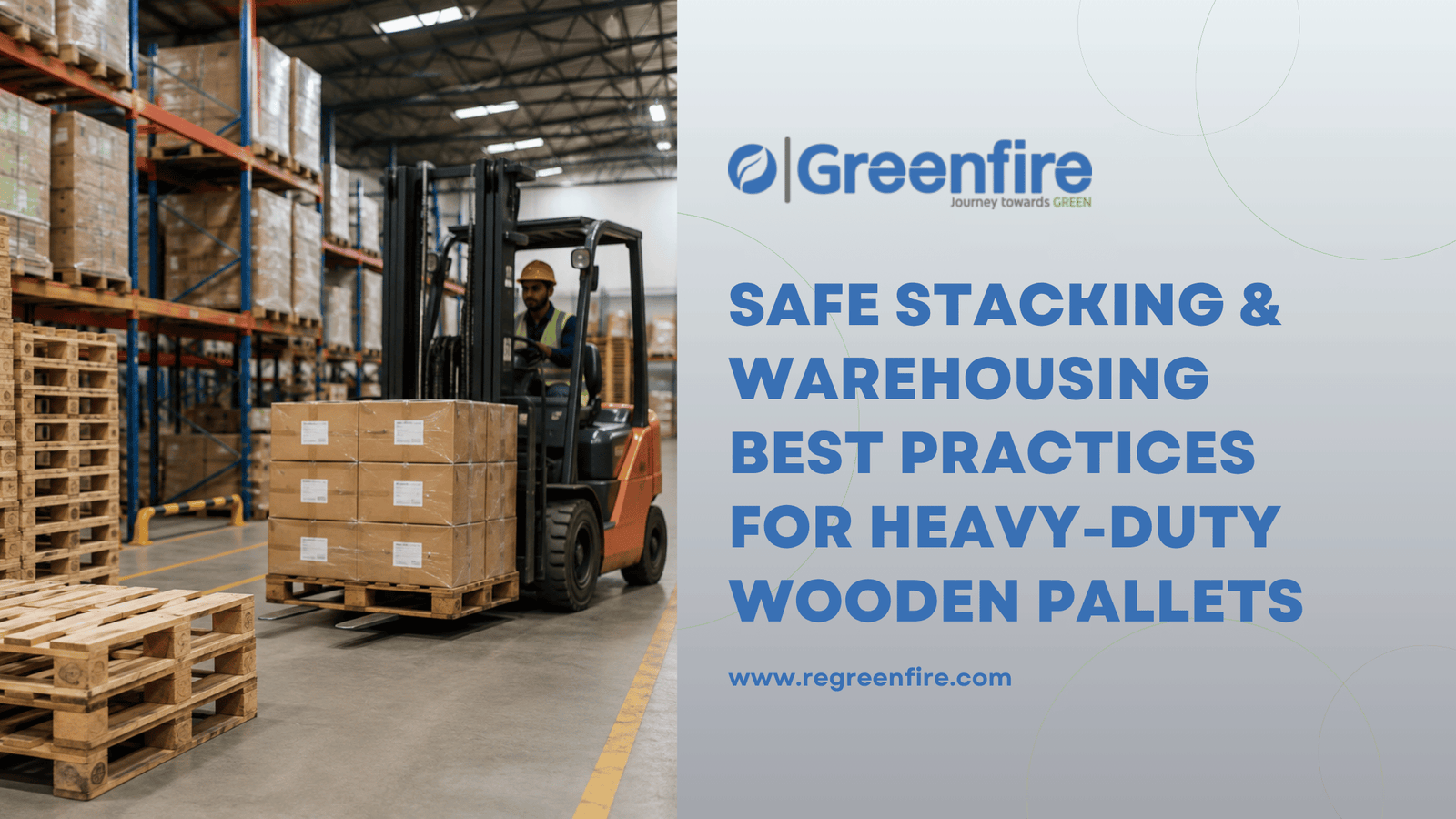
Wooden pallets are extensively used in warehouses and manufacturing facilities across India for storing and transporting heavy loads.
Stacking pallets in a warehouse safely requires proper load distribution, controlled stacking height, regular pallet inspection and suitable storage conditions. Improper stacking can result in unstable loads, pallet damage and workplace accidents.
Another issue that needs to be noted is the difference between wooden pallets and wood pellets. Wood pellets are used as biomass fuel. If companies need wood pellets manufacturers in India, they must select those meeting their particular fuel demands.
Why Safe Pallet Stacking Matters
Think about everything sitting in a typical warehouse: machinery parts, cartons, raw material, and finished goods. All of it depends on a stable base.
Good stacking practices help you:
- Reduce accidents
- Protect stored goods
- Use space better
- Improve forklift safety
- Lower pallet breakage
- Keep inventory organised
- Cut handling costs
It really comes down to balancing four things: load, stability, access, and space. Miss one, and the rest fall apart pretty quickly.
How to Stack a Pallet Safely: Best Practices for Wooden Pallets
1. Inspect Every Pallet First
Do not take into account the condition of a pallet only based on how it looks when viewed from afar. Instead, get closer and examine:
- Broken planks
- Cracked stringers
- Loose nails
- Warped parts
- Decay or moisture
- Splintering
Any damaged wood needs to be removed immediately since a bad pallet carrying something heavy is only one step away from disaster.
2. Know What the Pallet Can Actually Hold
Every pallet has a limit, and it's not something you should be guessing. Check the manufacturer's specs, and pay attention to both static load capacity (goods sitting still) and dynamic load capacity (goods being lifted or moved).
A pallet that handles a certain weight on the floor might not handle the same weight once a forklift picks it up. That gap catches a lot of warehouses off guard.
3. Spread the Weight Evenly
Lopsided loads are asking for trouble. Keep heavier items low, lighter ones on top, and the centre of gravity as close to the ground as possible.
Try not to bunch weight in one corner. A well-balanced pallet, centred and within its edges, is far less likely to tip during handling.
4. Keep Your Stacks Straight
A leaning stack is a warning sign, not a space-saving trick. Keep everything vertical.
If you're stacking cartons on top of pallets, an interlocking pattern usually helps just make sure it doesn't crush anything fragile underneath. And always match stack height to your ceiling clearance, fire safety rules, and the equipment you're working with.
How High Can You Stack Pallets in a Warehouse?
There is no single stacking height that is safe for every warehouse. How high can you stack pallets in a warehouse depends on the pallet condition, load weight, stability, storage method, racking system, ceiling and sprinkler clearance, and the material-handling equipment being used.
When deciding how high can pallets be stacked, make sure the stack remains stable and does not lean, shift or exceed the load capacity of the pallets or storage system. Loaded pallets should only be stacked as high as the pallet design, load characteristics and warehouse safety requirements safely allow.
How High Can Empty Pallets Be Stacked in a Warehouse?
Empty pallets may look easier to stack, but excessively high stacks can become unstable and create falling or fire hazards. Keep empty wooden pallets in a designated storage area on a level surface and limit the height according to your warehouse's fire-safety requirements, available clearances and safe handling procedures.
Avoid choosing a stacking height only to maximise storage space. Stability, access and safe forklift handling should always come first.
Safe Warehouse Layout and Pallet Storage
Keep Your Aisles Clear
This one sounds obvious, but it's ignored constantly. Forklifts and workers need room to move. Never let pallets creep into walkways, fire exits, or forklift paths.
Clearly marked zones make a real difference here; people simply know where things go.
Watch Out for Moisture
Wood and water don't mix well. Prolonged damp exposure weakens the structure and invites mould or rot.
This matters even more during India's monsoon season, especially in cities like Mumbai, Surat, and Kochi. Store pallets somewhere dry and ventilated, and if they do get wet, check them thoroughly before reusing.
Use Racking That Actually Fits
Your racking system needs to match your pallet size and weight. Never place a pallet on a bent or damaged beam, and don't push rack load limits just because it "seems fine".
A quick periodic check for bent frames or loose components goes a long way in preventing bigger problems later.
Forklift Handling: A Critical Safety Factor
Even a perfectly stacked pallet can turn dangerous with careless handling.
Operators should:
- Insert forks fully
- Avoid sudden braking
- Keep loads low
- Stick to set routes
- Check visibility
- Clear the destination first
- Never let anyone stand under a raised load
And this should go without saying only trained, authorised staff should be running this equipment.
Practical Tips for Indian Warehouses
Every warehouse is a little different, but a few habits consistently pay off:
- Keep inspection checklists
- Label pallet capacity clearly
- Follow FIFO for sensitive goods
- Run short refresher trainings
- Recheck storage before monsoon
None of these take much effort, but skipping them is usually where accidents start.
Common Mistakes to Avoid
Overloading pallets — Squeezing in extra stock might save space today, but it often ends in structural failure.
Using damaged pallets — A small crack seems harmless until it's carrying serious weight.
Pallet stacking — Tall stacking seems to be more productive, but it causes real difficulties with access and fire safety.
Weight distribution — Unbalanced loads move around unpredictably, especially while handling.
Mixing pallet sizes — Different dimensions in one storage system create gaps and instability nobody planned for.
Conclusion
Proper handling of a pallet is not difficult; it is all about being consistent in one’s work. Choose the right pallet, load the correct amount, inspect frequently, and do not compromise on the height and weight.
In Indian warehouses, particular care should be taken during the monsoon season, and proper forklift practice should be maintained.
And if you're actually researching wood pellets manufacturers in India for fuel purposes rather than pallets, it's worth choosing your supplier based on pellet quality and application fit, not just price.
For more on industrial biomass solutions and wood-based fuel products, visit Greenfire Energy PVT LTD and get in touch with the team about what you need.
FAQs
1. How high can you stack pallets in a warehouse?
There is no single maximum height suitable for every warehouse. Safe pallet stacking height depends on the pallet and load capacity, stack stability, racking system, ceiling and fire-safety clearance, and forklift handling requirements. Pallets should never be stacked higher than the point at which the stack can remain stable and safely handled.
2. How should heavy-duty wooden pallets be stacked?
On an even and sturdy surface. Avoid stacking, overloading, leaning, and anything that is damaged.
3. What safety measure is most critical when handling a pallet?
Check for damaged planks, nailed or not properly, cracking or moisture damaged pallets.
4. Can wooden pallets be left outside?
Not ideally. Rain, humidity, and sun exposure wear wood down fast. Dry, covered storage works much better long-term.
5. Is there any difference between wood pellets and wooden pallets?
Absolutely no! Pallets are used to store and move products, while wood pellets are biomass compressed into fuel. If you search for manufacturers of wood pellets in India, you need fuel providers rather than pallet providers.
6. What is the easiest way to increase pallet safety in a warehouse?
Regular inspections, proper load weight, forklift operator training, adequate space clearance, and moisture management.