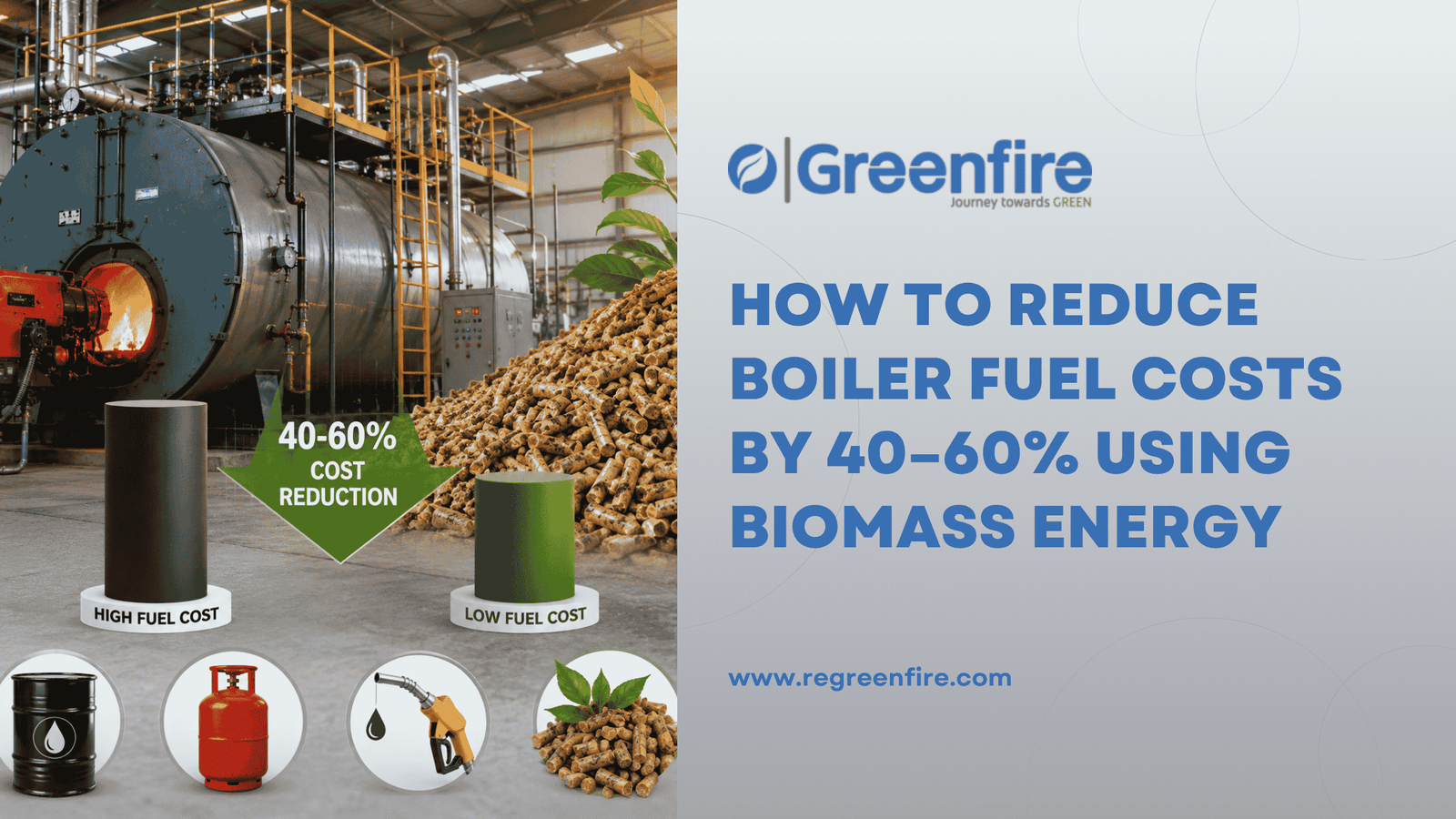
The prices of fuel used in industries keep increasing every year. In industries like manufacturing firms, food processing plants, textiles, chemicals, and others, boilers play a significant role in consuming energy. As such, when the price of fuel increases, there is an increase in operational costs.
This is the reason most industries are now moving away from traditional fuel types, such as coal, diesel, furnace oil, and liquid petroleum gas (LPG), and are going for biomass energy. Through advanced biomass equipment and with help from expert wood pellet boiler manufacturers, industries can cut down their fuel consumption by up to 40% to 60%.
Let's understand how biomass energy helps businesses save money and improve boiler efficiency.
What Is Biomass Energy?
Biomass energy is derived from organic sources, which are readily available and renewable.
Some biomass fuel examples are:
- Wood pellets
- Woodchips
- Agricultural wastes
- Sawdust
- Rice husk
- Crop wastes
These biomass fuels go into biomass boilers to produce steam and heat at a much lower cost than the cost of diesel or furnace oil per kg.
Why Boiler Fuel Costs Are Rising
If you have noticed your fuel expenses becoming a bit steeper each quarter, that’s because:
- Changes in prices for fossils around the world
- Increases in logistics and transportation expenses
- Increased regulations by governments
- Disruptions in supply chains
- Carbon taxes to be paid
But there is one thing you can control: your fuel choice.
How Biomass Boilers Reduce Fuel Costs
1. Reduced Cost of Fuel per Unit
- Less costly compared to diesel, LPG, or furnace oil by up to 40% to 60%
- Produces higher energy yield at a much cheaper cost
- Saving increases over time and is not stagnant
2. Good Combustion Efficiency
- Efficient heat transmission
- Minimal fuel wastage
- Good supply of steam production
- High thermal efficiency
Modern biomass boilers are engineered to match and often outperform conventional systems on efficiency.
3. Auto-Fuel Delivery Systems
- Automatic fuel delivery systems
- Intelligent burning control
- Instantaneous temperature checks
- Automatic ash disposal
Saving time, improving fuel efficiency, reducing labor expenses.
4. Reduced Dependence on Imported Fuels
- Sourcing fuels locally saves money in transport
- Improved fuel reliability
- Minimized risk to fuel supply
- Greater cost stability
You are not exposed to global economic shocks anymore when you get your fuel locally.
Why Wood Pellets Are a Preferred Biomass Fuel
When it comes to biomass fuels, wood pellets always rank number one in the industrial sector.
- High calorific value
- Low water content
- Uniformity of fuel quality
- Convenient storage
- Environmentally friendly
That’s why, when making plans for upgrading to new technology in the industrial sector, people always seek out experts in the field of wood pellet boilers.
Cost Saving Example
Here's a simple side-by-side that makes the numbers real:
Traditional Fuel Boiler
- High diesel/furnace oil consumption
- Frequent price fluctuations
- Higher operational costs
Biomass Boiler Using Wood Pellets
- Lower fuel cost per hour
- Stable fuel supply
- Reduced maintenance expenses
- Better energy efficiency
Most businesses recover their full investment within 2–4 years, and everything after that is pure savings.
Additional Financial Benefits of Biomass Boilers
Lower Operating Costs
- Reduced energy expenses
- Lower maintenance costs
- Less downtime from fuel shortages
Government Incentives
- Subsidies on renewable installations
- Tax incentives
- Green energy grants
- Carbon reduction programmes
Long-Term Cost Stability
- More predictable pricing
- Better budget control
- Less financial uncertainty
Unlike diesel or LPG, biomass fuel prices don't spike every time there's a geopolitical event. That consistency is worth a lot when you're planning annual budgets.
Environmental Benefits of Biomass Energy
Cost savings are important but sustainability is quickly becoming equally important for businesses.
The use of biomass in energy production will benefit your business in the following ways:
- Reduced carbon footprint
- Reduce environmental impact
- Meet ESG objectives
- Support projects for renewable energy
Your clients, stakeholders, and regulators are aware of your energy production methods. The use of biomass can help you provide a good response.
Industries That Benefit Most from Biomass Boilers
If your operation needs consistent steam or heat, biomass technology is worth a serious look:
- Food processing
- Textile manufacturing
- Pharmaceuticals
- Chemical plants
- Paper mills
- Dairy industries
- Packaging units
- Agro-processing facilities
High heat demand = higher savings. It's that straightforward.
Choosing the Right Biomass Boiler
Getting the right system matters as much as making the switch itself.
- Boiler capacity — size it to actual steam demand, not guesswork
- Fuel availability — confirm local wood pellet supply before committing
- Automation features — auto-feeding, combustion controls, safety systems
- Manufacturer experience — seasoned wood pellet boiler manufacturers provide design support, installation guidance, and long-term service
A poorly sized or poorly supported system won't deliver the savings you're expecting. Choose wisely.
Common Misconceptions About Biomass Boilers
- Very high maintenance
Modern systems are highly automated and built for easy daily operation.
- Fuel is hard to source
Wood pellets are now available through well-established supply networks across most regions.
- Too expensive upfront
Fuel savings offset the investment within a few years. The ROI is clear.
- Lower efficiency
Advanced biomass boilers deliver industrial-grade efficiency that competes directly with conventional systems.
Conclusion
Rising fuel costs are a business problem, and biomass energy is a practical, proven solution. Industries switching to modern biomass systems with support from trusted wood pellet boiler manufacturers are already seeing 40–60% reductions in fuel expenses, better operational stability, and a stronger sustainability profile.
The longer you wait, the more you pay. The switch to biomass isn't a future plan anymore for thousands of industries; it's already the present.
FAQs
1. How much can industries save by switching to biomass boilers?
There is a huge range of savings from 40% to 60%, based on fuel types and boiler efficiency.
2. Why are wood pellets commonly used in biomass boilers?
Wood pellets possess the characteristic of being high in density with minimal moisture levels.
3. Can biomass boilers be used for larger scale industry?
Yes. Biomass boilers are widely used in large-scale industry and come in a wide range of sizes.
4. Do biomass boilers help to reduce carbon emissions?
Yes. Biomass boilers are known as renewable energy sources and usually produce less carbon dioxide than fossil fuel energy sources.
5. How do I select manufacturers of wood pellet boiler manufacturers?
Select manufacturers who have prior experience in the field, certifications for quality and provision of after-sales services.