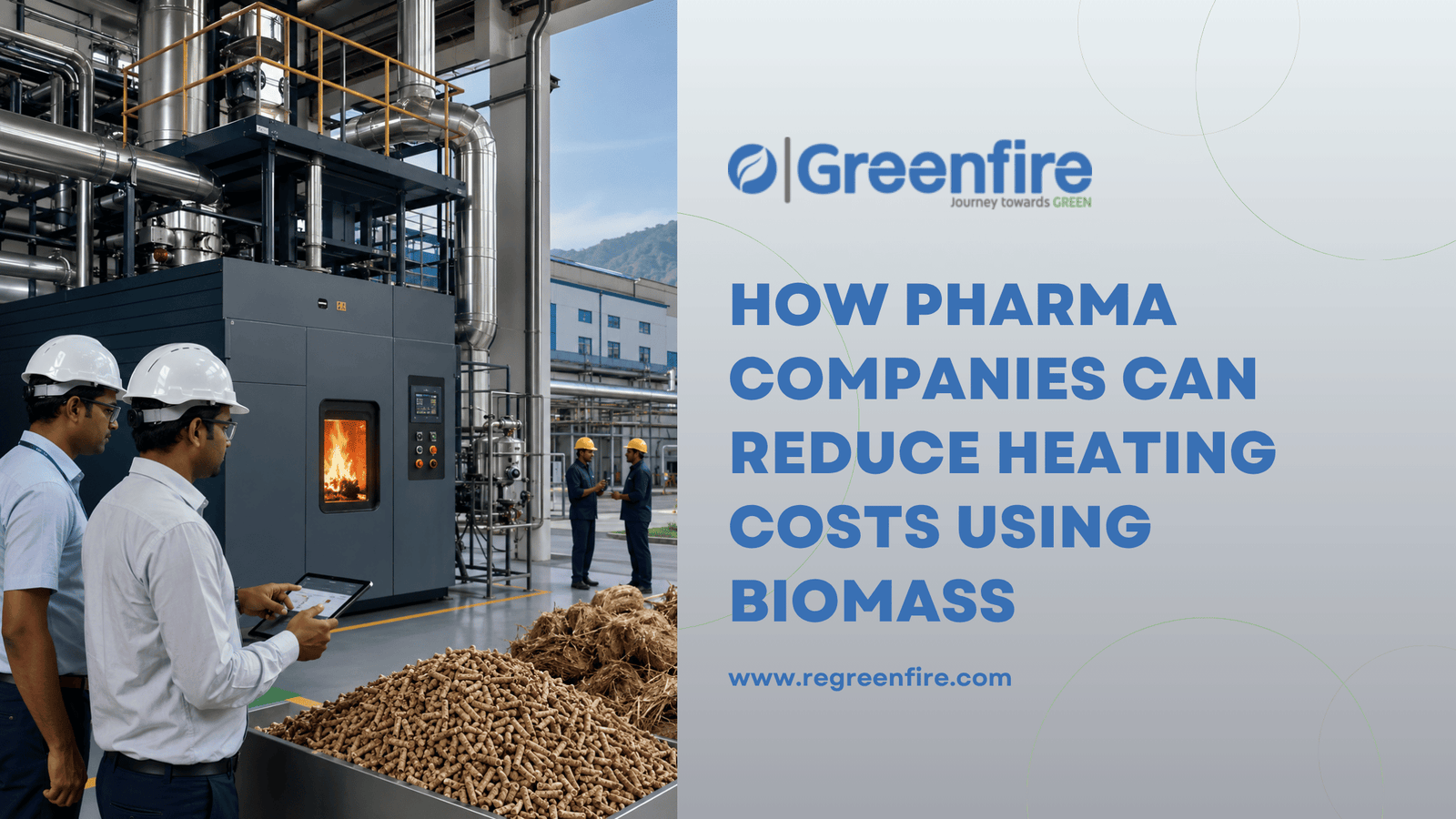
The production of pharmaceuticals relies heavily on heat. Heat sterilization, drying, HVAC systems, and process heat all take away from fuel expenses each and every month. And if you are still using diesel or furnace oil as your energy source, then you know very well about how volatile such costs can be.
That is precisely the reason why more and more pharmaceutical companies in India are moving to an automatic biomass boiler. It is a fool-proof solution for reducing heating costs while maintaining the required heat levels.
Let’s explore how biomass heating works and how pharmaceutical companies can reduce their heating costs by using biomass.
Why Heating Costs Are Such a Big Problem for Pharma Units
Pharma plants can’t just turn off their boilers when fuel prices jump. Sterilisation cycles, autoclaves, and HVAC systems need consistent heat, regardless of what diesel or furnace oil costs that week.
A mid-sized pharma unit in Gujarat or Himachal Pradesh can easily spend lakhs of rupees every month just on fuel for steam generation. Add rising compliance costs and tighter margins, and heating becomes one of the largest controllable expenses on the balance sheet.
That's the operative word: controllable. Unlike raw material costs or regulatory fees, fuel choice is something a plant can actually change.
What Is an Automatic Biomass Boiler?
Automatic biomass boiler is a device that uses organic waste materials such as agricultural residue, wood chips, rice husk or bagasse to produce steam or hot water. Manual biomass systems need to be fed fuel and watched over the fire constantly.
The system itself, using sensors and automated controls, handles the fuel feeding, combustion control and ash removal. For a pharma plant, this means:
- Consistent temperature output
- Minimal human supervision
- Fewer human mistakes
- Reliable steam quality
That automation is what makes biomass boilers viable for pharma, where process consistency is not optional; it’s a regulatory requirement.
How It Differs From Traditional Fuel Boilers
A boiler burning diesel or furnace oil relies on imported, refined fuel, prices subject to swings in world crude markets. Biomass, by contrast, is based on locally available agricultural and industrial waste.
That one difference changes the entire cost equation. India generates enormous quantities of crop residue and biomass waste every year, much of it available at a fraction of the cost of fossil fuels.
How Biomass Boilers Actually Reduce Heating Costs
1. Lower Fuel Cost Per Unit of Heat
Biomass fuel is usually 40-60% cheaper than furnace oil or diesel for the same heat output. Rice husk, wood chips and briquettes are priced in a much more stable range than the volatile fossil fuel markets.
This difference leads to substantial annual savings for a pharma unit which runs boilers all year round.
2. Price Stability Over Time
Furnace oil and diesel prices are varying as per international crude prices, taxes, and exchange rates. Biomass fuel prices, which are dependent on local farmers and agro-industries, are stable.
This allows the finance department to prepare budgets for their operational expenditure months in advance.
3. Reduced Dependency on Imported Fuel
Most fossil fuels used in Indian industry are either imported or refined from imported crude. Biomass fuel is sourced domestically, often from within the same state or a neighbouring one.
Plants located in industrial clusters like Ankleshwar, Vapi or Baddi can source biomass fuel from the neighbouring agricultural belts and also cut down the transport cost.
4. Lower Maintenance With Automation
Manual biomass system operation usually requires constant monitoring, which results in labour expenses. The automated biomass boiler decreases reliance by having:
- Fuel input automation
- Combustion process automation
- Ash extraction automation
- Minimum need for inspections
The less manual intervention involved, the less mistakes made, and less costs incurred.
5. Government Support and Incentives
The move by India towards clean energy in industry has seen the creation of subsidy programs aimed at encouraging the use of biomass energy sources. Several pharmaceutical companies have made use of such incentives in order to recover part of their investment.
It may be a good idea to find out what schemes are available currently via your state's department of renewable energy.
Practical Benefits Beyond Cost Savings
There are other reasons apart from the cost factor that is compelling pharmaceutical companies to take this step. Biomass boilers have other benefits that are important for heavily regulated industries, such as:
- Lower carbon footprint
- Less air pollution
- Better preparedness for compliance
- Stronger branding position
For any company that exports their products to Europe or the United States, sustainable credentials form an integral part of their vendor assessment.
Common Mistakes to Avoid
It is noted that many companies fall short of their anticipated savings due to bad planning.
Some of the mistakes to avoid include:
- Use of undersized/oversized boilers
- Using poor quality of biomass fuel
- Poor maintenance
- Poor fuel storage
- Failure to select suppliers with good technical backup
- No analysis on long-term fuel supply.
Good system design and maintenance practices will help increase both the efficiency and life of the equipment.
Things to Check Before Installing an Automatic Biomass Boiler
- Verify actual heat requirement
- Fuel availability in the region
- Automation capabilities
- Emission compliance certification
- Vendor payback periods
- After-sales service availability
Spending time on these aspects prior to installation will avoid future headaches.
Final Thoughts
Heating costs don’t always have to eat away at pharma margins. The automated biomass boiler system represents an easy and economical choice that pharmaceuticals in India can employ in order to lower their costs without breaking any process or environmental regulations.
The transition requires planning and considerations in terms of fuel supply and choice of vendor, but the gains in the long run make it worth considering.
And if your pharmaceutical unit is looking at implementing biomass boilers, our experts at Regreenfire can assist you in making your choice of boiler capacity and fuel source.
FAQs
1. What is the use of automatic biomass boilers?
It is used for the production of steam and hot water in industries through the use of biomass fuels which are automatically combusted rather than being manually handled.
2. How much will pharma manufacturers save by shifting to biomass?
Pharma manufacturers will be able to save up to 40-60% on fuel costs by opting for biomass in place of furnace oil or diesel.
3. Is the availability of biomass fuel easy in India?
Yes, as in agricultural states such as Punjab, Gujarat, Maharashtra, and Uttar Pradesh, where crop waste is plentiful and affordable.
4. How long does it take for a biomass boiler to provide an ROI in pharma plants?
It takes 2 to 4 years on an average for pharma plants to achieve ROI on biomass boilers.
5. Is biomass heating eco-friendly?
Yes, biomass is an eco-friendly and renewable energy form because its carbon emission is lower compared to other sources like fossil fuels.