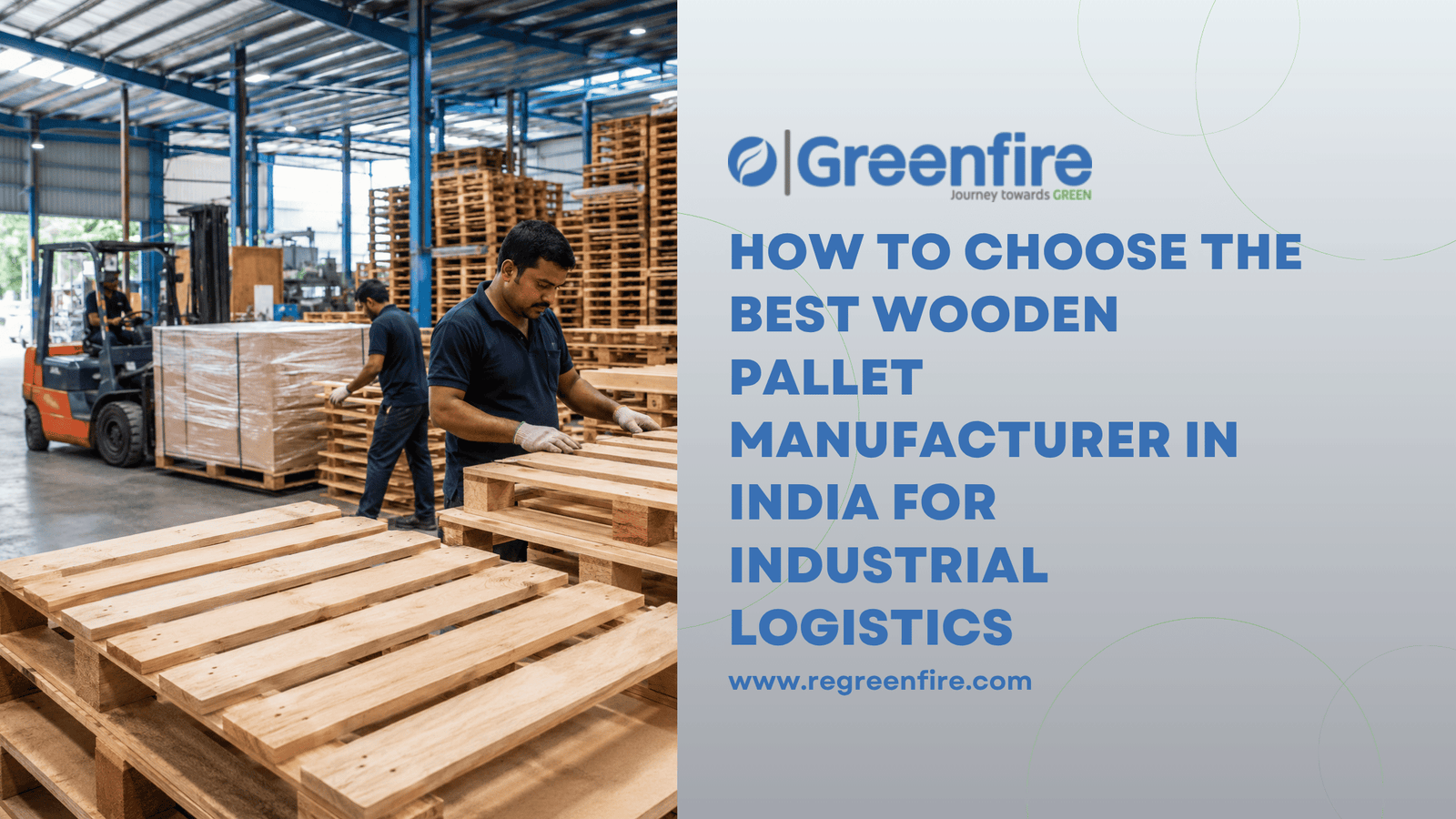
Pallets made from wood help the Indian industries run smoothly. Pallets are the ones that allow you to stock up, pile up, and move your goods around in a safe way.
Whether you are based out of Ahmedabad, Vadodara, Mumbai, Pune, or Delhi, you depend on pallets to get your work done in material handling. But selecting a pallet is not only about getting the best quote. Quality of timber, design, weight capacity, and uniformity of the production process make the difference.
That's exactly why finding dependable wooden pallet manufacturers in Gujarat matters so much. In this guide, we’ll know how to choose the best wooden pallet manufacturer in India
Why Choosing the Right Wooden Pallet Manufacturer Matters
A pallet looks basic. Four legs, a flat top, done. But its construction quietly decides how well your entire operation runs.
A poorly built one cracks under weight, damages the goods on top of it, and slows down your handling process. Replace them too often, and your costs start climbing fast.
A manufacturer worth trusting pays attention to:
- Timber quality
- Correct dimensions
- Load-bearing capacity
- Strong joints
- Moisture control
- Manufacturing consistency
- Customisation options
- Delivery reliability
Get this right, and your supplier stops being "just a vendor"; they become part of your logistics chain.
1. Understand Your Industrial Requirements
Before you even call a manufacturer, figure out what you actually need.
Think about the products going on the pallet: their weight, their shape and how they'll be moved. Forklift? Hand truck? Something else?
Key things to nail down:
- Maximum product weight
- Static and dynamic loads
- Pallet dimensions
- Rack compatibility
- Forklift entry type
- Indoor or outdoor use
- Reusable or single-use
- Domestic or export
A pallet carrying heavy engineering parts needs far more strength than one holding light packaged goods. Know the difference before you order.
2. Check the Quality of Timber
Timber is where pallet strength really comes from.
Ask what wood they're using and whether it's properly seasoned. Wet or poorly chosen wood warps, splits, and sometimes even grows fungus, none of which you want holding up your inventory.
Before you buy, check:
- Timber grade
- Moisture level
- Board thickness
- Visible knots or defects
- Split resistance
- Build quality
Don't be fooled by a polished-looking pallet. A smooth finish doesn't tell you anything about how strong it actually is underneath.
3. Verify Load-Bearing Capacity
The loading capacity is not constant and depends upon the mode in which the pallet will be used.
The static loading capacity of a pallet on the floor of the warehouse differs from dynamic loading capacity of a pallet on racking.
Therefore, it is important to get detailed information about:
- Static loading capacity
- Dynamic loading capacity
- Racking loading capacity
- Load distribution
As an illustration, the pallets capable of holding 1,000 kg on the floor would probably not be able to hold such loading when installed on the racking.
4. Evaluate Manufacturing Quality
If you're buying in bulk, consistency matters more than almost anything else.
Every pallet in the batch should have matching dimensions, board thickness, and fastening quality. Uneven pallets cause real headaches with forklifts, conveyors, and automated systems.
While choosing the wooden pallets manufacturers in Gujarat, one needs to know how do they check their products? The factors that need attention include:
- Right dimensions
- Safe boards
- Proper joints
- Good nailing
- Edge finishing
- Pre-shipping inspection
The best advice here is to get a trial shipment first before making a large-scale order.
5. Consider ISPM-15 Requirements for Exports
Exporting from India? Then wooden packaging rules apply, and they're not optional.
ISPM-15 is the international standard covering wood packaging in global trade, meant to stop pests from hitching a ride in untreated wood. Depending on your destination country, your pallets may need specific treatment and marking.
Talk to your manufacturer about this before the order goes through — not once your shipment gets stopped at customs. Never assume a regular pallet automatically clears international shipping.
6. Don't Select a Manufacturer Based Only on Price
Everybody likes to get a bargain, especially when ordering large quantities. However, a bargain does not necessarily translate into making the right decision.
Low-cost pallets tend to be less durable, have poorer build quality and made from inferior wood. This results in higher repair costs, additional losses due to damaged cargo and increased downtime.
Instead, consider such factors as:
- Expected durability
- Capacity
- Quality of timber
- Ease of repair
- Shipping costs
- Frequency of repairs
Sometimes it is better to pay more for something that will last.
7. Look for Customisation Options
Every company is not designed for the standard sizes of the pallets, and that's alright.
The ideal manufacturer will be able to alter:
- Length and width
- Height
- Spacing of the boards
- Points of entry
- Loading capability
For example, if you manufacture any equipment, you would certainly want a pallet designed for your equipment and not something that comes ready-made from the store.
8. Consider Delivery and Production Capacity
Great pallets don't help much if they show up late.
Even a top-quality manufacturer can hurt your operations if they can't meet your timelines. Before signing on, ask about:
- Production capacity
- Bulk-order handling
- Standard lead time
- Repeat-order support
- Urgent order handling
If you're operating out of Gujarat's industrial zones, working with a nearby manufacturer often cuts down transport time and logistics costs too.
Common Mistakes to Avoid
Choosing the cheapest pallet — often leads to higher long-term costs from constant replacements.
Ignoring the actual load — always confirm the real weight and how the pallet will be used before ordering.
Skipping sample testing — a physical check catches build issues a phone call never will.
Forgetting export regulations – being noncompliant with ISPM-15 standards will have your consignment detained at the port.
Overlooking equipment fit — pallets must be compatible with your racks, forklifts, and conveyor systems.
Conclusion
Picking the right wooden pallet manufacturer isn't about chasing the lowest quote. Rather, it involves finding high-quality wooden pallets that have proper weight capacity, are delivered on time, and are actually designed for your company.
When evaluating different wooden pallets manufacturers in Gujarat, do not forget to include all criteria like timber quality, production process, customizability, and export rules.
To know more about industrial solutions, visit regreenfire.
FAQs
1. How can I choose the best wooden pallet suppliers in Gujarat?
Choose those who have a high standard of wood, loading capacity, consistent construction, ability to customize and reliable deliveries.
2. What all things need to be considered while buying wooden pallets?
Size of pallet, quality of wood, thickness of board, loading capacity and compatibility with the existing storage facility.
3. Can wooden pallets be used for exports?
Yes, but it could possibly need to satisfy ISPM-15 requirements, depending on the destination country. Be sure to verify this in advance.
4. Which is better, custom-made or standard wooden pallets?
Custom wooden pallets help carry irregular cargo loads, but standard pallets are sufficient for you if your warehouse equipment uses them.
5. How can one reduce the cost of pallets for businesses?
One should not focus only on its initial cost; other considerations include its durability and replacement frequency.