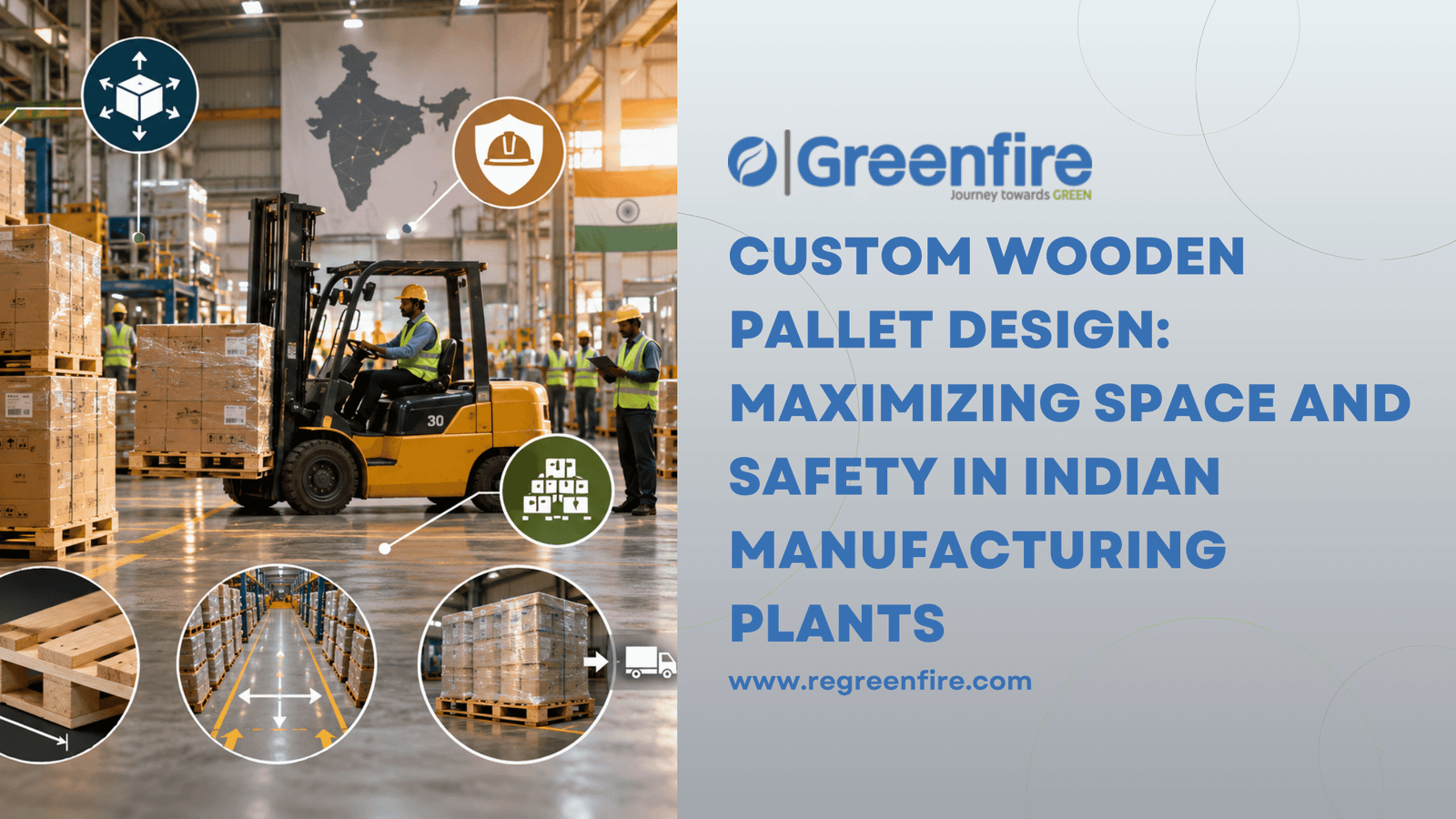
Each square metre of manufacturing and storage space is valuable in India’s manufacturing plants. Wooden pellets that have been customised according to the needs of the company will be able to offer effective space utilisation, material protection, and increased safety measures at work. This will be especially beneficial when the factories deal with machinery parts, raw material, finished products, or fuel products.
Designing the pellet for the company entails not only selecting the appropriate dimensions, weight, structure, and handling properties but also designing the pallet to suit the product being manufactured and its transport process through the facility. The companies dealing with industrial equipment need to consider the right choice of design for their wood pellet furnace manufacturers.
Why Custom Pellet Design Matters in Indian Manufacturing Plants
A standard pellet is made for a standard box. Most plants do not ship standard boxes.
One unit moves tiny cartons. The next handles long fabricated frames or a machine body that weighs more than a small car. Put these on the wrong pellet, and things go wrong fast. Loads lean, goods get damaged and forklift drivers struggle.
So start with the product, then build the pellet around it. Think about:
- Product size and weight
- Forklift access
- Rack dimensions
- Stacking height
- Storage conditions
Once you treat the pellet as part of your handling system, the choices get much easier.
How Custom Wooden Pellets Improve Space Utilisation
Industrial space in Ahmedabad, Vadodara, Pune or Chennai is not cheap. Every gap between loads is rent paid for nothing.
Picture a unit that stores parts measuring 1,100 mm by 900 mm. If it uses a much bigger standard pellet, each bay loses a strip of floor. A pellet cut close to the real footprint fixes that. Across fifty bays, the saving is quite visible.
You also get:
- More stock per bay
- Neater rows
- Less overhang
- Quicker stock checks
One caution, though. Do not shrink a pellet so much that the load wobbles. Saved space means little if the stack leans.
Designing Pellets for Safer Material Handling
Safety has to be part of the design from the first day. Adding it later is how accidents happen.
A pellet must carry its load without bending or cracking. Timber, board thickness, blocks and nails all matter here. So does fork entry. If the openings are tight, drivers tend to force the lift, and that damages both the pallet and the goods.
Ask how the pellet will actually travel. Will it be:
- Lifted by forklift
- Moved by pellet truck
- Stacked on another pellet
- Stored on racks
- Sent by road
Each use needs a slightly different build. A pellet that is fine on the floor can fail on a rack beam.
Choosing the Right Wood and Construction
Good timber lasts longer. Wood that is well seasoned, with few knots and splits, will always beat green or damaged boards.
Then match the build to the load. A pellet for light-packed parts is a very different thing from one that carries machinery.
For heavier jobs, you can ask your maker for:
- Reinforced stringers
- Thicker deck boards
- Extra support points
- Well-placed nails
- Corner protection
Stronger does not mean heavier for the sake of it. You want the strength you need and no more, so you are not paying for extra wood.
Pellet Design for Industrial Products and Equipment
Indian plants deal with awkward, heavy goods every day. Boilers, fabricated parts, electrical panels and furnace equipment all call for careful pellet planning.
A heavy part with a narrow base can tip when the forks lift it. It needs extra support underneath. A long part needs a wider footprint so it stays balanced.
When you speak to manufacturers of wood pellet burners, ask how their equipment is packed and shipped. Parts like feeders, hoppers and accessories often arrive in different sizes. Your receiving area should be ready for each one.
Fuel needs thought too. Pellets should rest on raised pellets, away from damp floors, and well apart from any heat source. Do not burn old pallet wood in a pellet furnace either. Used wood may carry paint, chemicals or nails, and that can harm the machine.
Practical Checklist Before Ordering Custom Pellets
Gather these details first. Your pellet maker will find it very useful.
- Product size: Length, width and height, including packaging.
- Load weight: Average and maximum.
- Handling equipment: Forklift or pellet truck model.
- Storage method: Floor stacking or racks.
- Movement frequency: Busy lines need stronger builds.
- Environmental exposure: Humidity, rain and heat.
- Transport requirements: Truck or container fit.
Also ask for the load rating in writing. Static, dynamic and racked loads are three different numbers. Mixing them up is a common reason pellets fail.
Common Custom Pellet Design Mistakes
Even a custom pellet can go wrong when the planning is rushed.
Choosing only by price:
A cheap pellet may use weak timber. Look at how long it will last, not just the bill.
Ignoring forklift access:
Unfavourable entry points encourage workers to take shortcuts, and the wooden boards wear out.
Distribution of load ignored:
A heavy load placed on certain wooden boards stresses them more and makes them break faster.
Using one pellet for every application:
Different goods need different sizes and strengths. One size for everything rarely works.
Skipping inspection:
A cracked board or loose nail can injure someone. Pull damaged pellets out of use at once.
FAQs
What is a custom wooden pellet?
It is a pellet made for one product's size, weight, handling method and storage setup. It does not follow a fixed standard size.
What makes custom pellets help to maximize warehouse space?
They match your goods and racks closely, so there are fewer gaps. That gives you better stacking and rack use.
Are custom wooden pellets suitable for heavy machinery?
Yes, if they are built for the load. Heavy equipment usually needs stronger timber, extra supports and a proper lifting design.
How should I choose a pellet for industrial equipment?
Check the weight, size, balance point, lifting method, storage place and transport route before you finalise the design.
What should I consider when comparing wood pellet furnace manufacturers?
Look beyond furnace specifications. Ask how parts will be packed, moved and stored, then plan your pellets and fuel storage to suit.
Conclusion
A good pellet does quiet, steady work. It saves floor space, protects products and keeps your team safer every single day.
If you are shortlisting wood pellet burners for furnaces, put handling and storage into your plan early. It makes the journey from delivery to production much smoother.
For practical advice on biomass heating and safe plant layout, visit Greenfire. Choose your equipment and handling methods around what your plant really needs.