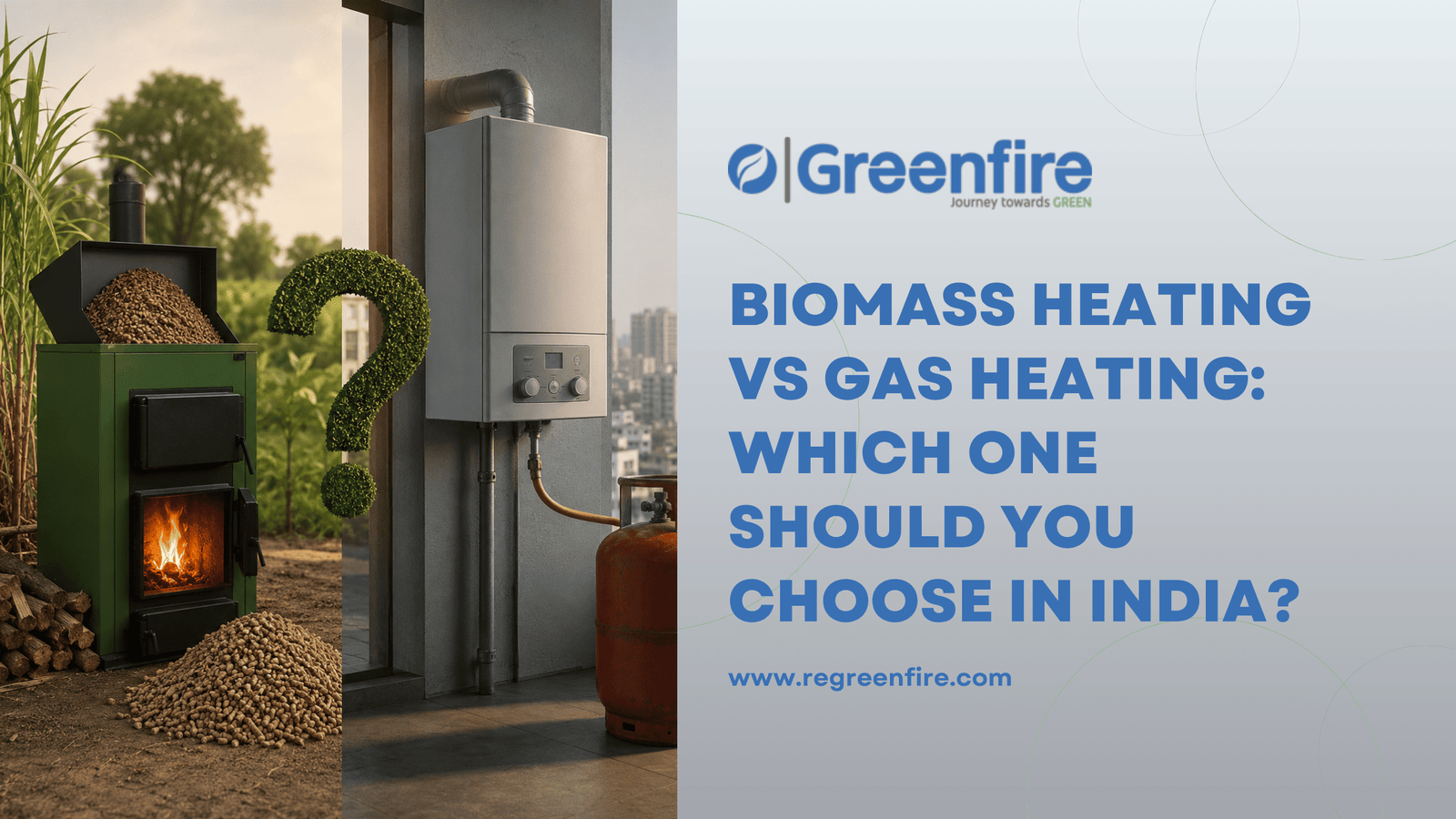
Industrial heating is a critical part of manufacturing processes in India. From food processing and textiles to chemicals and pharmaceuticals, industries rely heavily on heating systems for production. Traditionally, gas-based heating systems have been widely used due to their convenience. However, with rising fuel prices and environmental concerns, biomass heating systems are becoming a strong alternative.
So the real question is simple: biomass heating or gas heating—which one should you choose?
Let’s break it down in detail.
Understanding Biomass Heating and Gas Heating
Before comparing both systems, it is important to understand how they work.
What is Biomass Heating?
Biomass heating uses organic materials such as wood pellets, agricultural waste, rice husk, sawdust, and briquettes to generate heat. These materials are burned in a controlled system like a biomass burner or boiler to produce thermal energy.
Modern systems are highly advanced and automated, making them suitable for continuous industrial operations.
What is Gas Heating?
Gas heating uses fuels like LPG, PNG, or natural gas to generate heat. It is widely used in industries due to its easy availability and clean combustion process. However, gas prices are often unpredictable and dependent on global markets.
Cost Comparison: Biomass vs Gas Heating
Cost is one of the most important factors for industries in India.
Biomass Heating Cost Advantages
Biomass fuel is generally much cheaper compared to gas. Industries using biomass heating systems can reduce fuel expenses significantly, often in the range of 30% to 60% depending on usage.
Key cost benefits:
- Lower fuel price compared to LPG and PNG
- Locally available raw materials
- Stable pricing in the long term
- Reduced dependency on imports
Gas Heating Cost Challenges
Gas prices fluctuate frequently due to global demand and supply conditions. For industries, this creates uncertainty in operational expenses.
Other hidden costs include:
- Infrastructure setup for gas supply
- Pipeline or storage system maintenance
- Higher monthly operational bills
Efficiency and Performance Comparison
Biomass Heating Efficiency
Modern biomass heating systems are designed for high efficiency. Automated systems ensure controlled combustion, which reduces fuel wastage and improves energy output.
Advantages include:
- High thermal efficiency with modern burners
- Automated fuel feeding systems
- Consistent heat output for industrial use
Gas Heating Efficiency
Gas heating is known for its clean and consistent combustion. It is easy to control and offers quick heating response. However, it may not be the most cost-efficient option for long-term industrial use.
Environmental Impact
Environmental sustainability is becoming a major focus for industries in India.
Biomass Heating and Environment
Biomass is considered a renewable energy source because it uses organic waste materials. It produces lower net carbon emissions compared to fossil fuels since the carbon released is part of the natural cycle.
Benefits include:
- Reduced greenhouse gas emissions
- Utilization of agricultural waste
- Supports circular economy
This is why many industries are shifting toward biomass solutions and working with suppliers like a Biomass pellets burner manufacturer in Gujarat to adopt cleaner energy systems.
Gas Heating and Environment
Gas is cleaner than coal or diesel but still a fossil fuel. It produces carbon emissions and contributes to greenhouse gases. While it is more environmentally friendly than coal, it is not fully sustainable in the long run.
Maintenance and Operational Requirements
Biomass Heating Maintenance
Modern biomass systems require moderate maintenance. Automated features reduce manual effort significantly.
Key points:
- Regular ash removal required
- Fuel storage management needed
- Automated systems reduce labor costs
Gas Heating Maintenance
Gas systems require less day-to-day maintenance but depend heavily on supply infrastructure. Any disruption in gas supply can directly affect production.
Availability and Supply in India
India has a strong and growing biomass supply chain due to its agricultural economy. Biomass fuel is easily available in states like Gujarat, Maharashtra, and Punjab.
On the other hand, gas availability depends on pipeline infrastructure and regional distribution, which may not be equally accessible in all industrial zones.
Safety Considerations
Both systems are safe when properly installed and maintained.
- Biomass systems require proper storage and fire safety measures
- Gas systems require leak detection and pressure control systems
Proper engineering and regular inspections are essential for both.
Long-Term Investment Perspective
When choosing between biomass and gas heating, industries must consider long-term costs.
Biomass heating offers:
- Lower operational costs
- Better ROI over time
- Reduced dependency on fossil fuels
Gas heating offers:
- Easy operation
- Faster heat response
- Higher running costs in long term
Conclusion
Both biomass heating and gas heating have their advantages. Gas heating is convenient and clean, while biomass heating is cost-effective and sustainable.
However, for industries in India looking to reduce operational costs and improve long-term sustainability, biomass heating is emerging as the preferred choice.
With advancements in automation and technology, biomass systems are no longer traditional setups. They are modern, efficient, and designed for industrial performance.
Choosing the right system depends on your industry needs, but the shift toward biomass energy is clearly growing across India as companies aim for lower fuel costs and greener operations.
FAQs
Which is cheaper, biomass or gas heating in India?
Biomass heating is generally cheaper than gas heating due to lower fuel costs and stable pricing.
Is biomass heating suitable for large industries?
Yes, modern biomass heating systems are designed for continuous industrial operations.
Is gas heating more efficient than biomass?
Gas heating is efficient in terms of combustion, but biomass offers better cost efficiency for long-term use.
Can biomass replace gas heating completely?
In many industries, biomass can fully replace gas heating depending on system design and requirements.